
Islamic Madressa Preschool Launches at Banbury Madni Masjid
Author: Banbury Madni Masjid | Publish Date: 13 November 2026
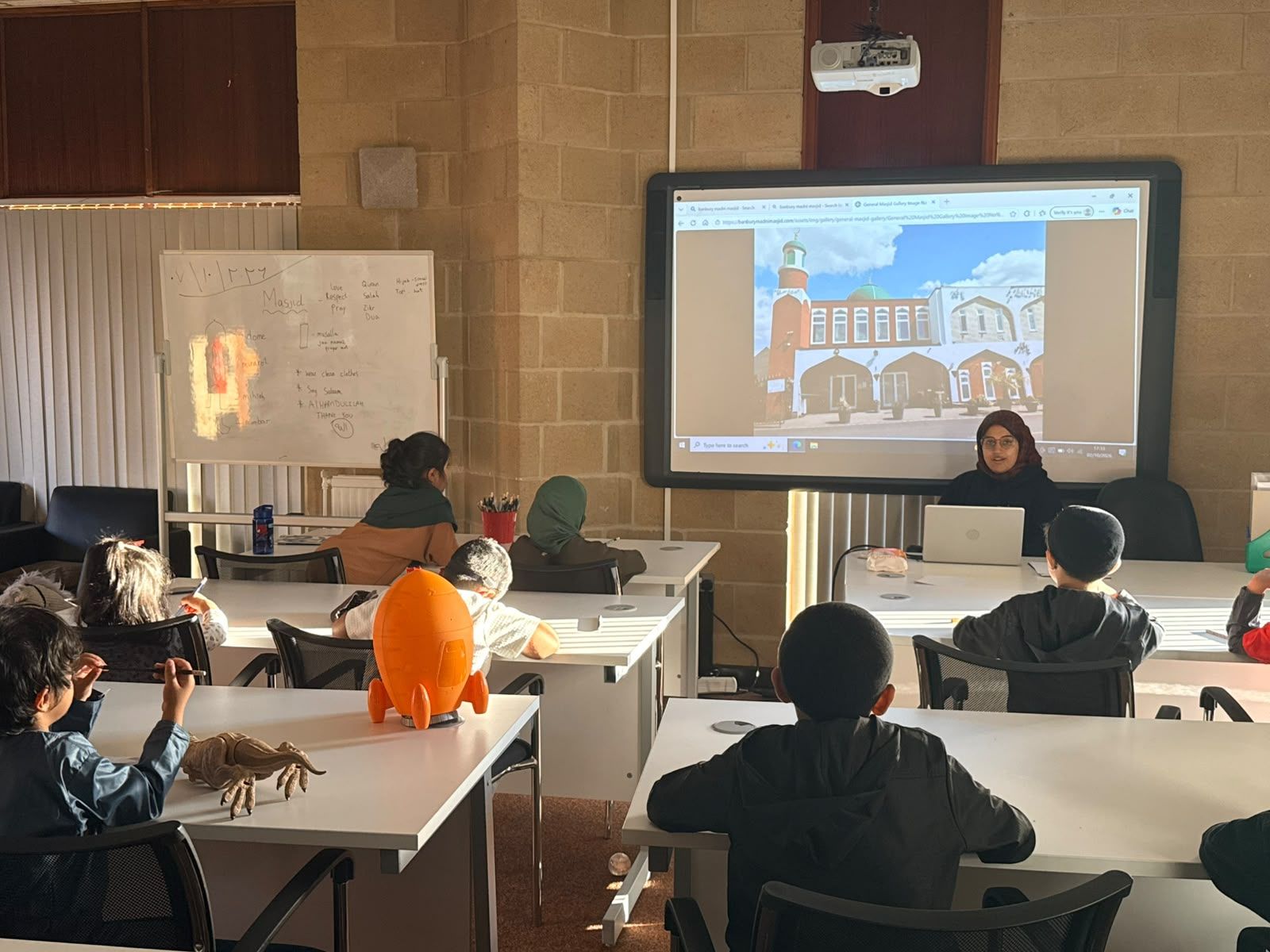
This term, Banbury Madni Masjid opened its new Islamic Madressa Preschool for children aged 3 to 5. Twelve children joined us for the first term, and we are delighted with how it went. The children have been keen, curious and full of questions, and their parents have supported us from the first session.
In this post we want to share why we started the preschool, how the first term went, what we focus on in each session and how you can sign your own child up.
We started the preschool to make early Islamic education easier for families in our community to reach. Many parents want their children to grow up knowing about their faith, but it is not always easy to know where to start with a three- or four-year-old.
The years before school are when children pick up habits that stay with them. They copy what they see, remember songs and stories for a long time, and are naturally curious about the world around them. We felt this was the right time to give them a gentle first taste of Islamic learning, in a place where they can make friends and enjoy themselves.
We also wanted to support what parents are already doing at home. The preschool is there to add to that, not replace it. Our hope is that what the children learn on Tuesdays and Wednesdays carries on into the rest of their week.
Twelve children came along during Term 1 and took part in activities planned for their age. It was lovely to watch them settle in. Some were confident from the first day. Others took a few weeks to find their feet. By the end of term, all of them were getting stuck in, in their own way.
The results have been very encouraging. The children responded well when sessions were fun and when activities suited them. It showed us that early Islamic learning can be enjoyable and meaningful at the same time, as long as it is planned around the children rather than around a fixed lesson.
One of the biggest lessons from the first term was how differently young children learn. Some listen closely to a story and can tell it back to you the following week. Some need to see pictures or hold something in their hands before an idea makes sense. Others learn best by moving around, joining in with actions, or doing the same thing again and again until it sticks.
We do not expect every child to learn the same thing at the same speed. A child who is quiet in the first few weeks may simply be taking everything in. A child who cannot sit still may learn more from a song with actions than from listening. Our job is to notice these differences and plan for them.
That is why we mix things up in every session: stories, songs, play, hands-on activities and plenty of repetition. If one approach does not work for a child, we try another.
Everything we do in the preschool comes back to five things:
• Learning through play. Young children learn best when they are enjoying themselves, so we keep sessions light and playful.
• Joining in. We encourage every child to take part, whether that means answering a question, singing along or helping with an activity.
• Going at their own pace. Every child develops differently, and we let each one move on when they are ready.
• Islamic values. Alongside the basics of the faith, we teach good manners and positive values from an early age.
• Feeling safe and included. Children learn best when they feel comfortable, so we make sure everyone feels welcome.
Our aim is not to fill young heads with facts. We want children to enjoy coming, feel at home with their faith and leave each session wanting to learn more. If they take away a love of learning about Islam, the details will follow.
Sessions take place onsite at the Umar Education and Welfare Centre. The setting is gentle, safe and fun, and it is sensory-friendly, so children who find busy or noisy places difficult can still feel comfortable.
For many of the children, this is their first experience of any kind of class. We want it to be a good one. A child who feels relaxed and happy is far more likely to be curious, ask questions and grow in confidence, and those are the habits we hope will stay with them as they get older.
Parents play a big part in what young children remember. A few simple things at home can make a real difference:
• Ask your child what they did at preschool, and let them show you any songs or actions they learned.
• Repeat new words, duas or short phrases together during the week.
• Read or tell stories about the Prophets at bedtime.
• Praise your child for trying, not just for getting things right.
Little and often works best at this age. Five minutes a day will do more than one long session at weekends, and it gives you and your child something special to share.
A big thank you to the parents and families who signed their children up for something new and trusted us with them. Starting anything new takes a leap of faith, and your support made this first term possible.


Serving the community,
working in partnership
We believe that our primary role is to serve the needs of the local community
Join Our Community